
What is Reflective Supervision?
Reflective supervision helps educators understand themselves more deeply and feel grounded in their pedagogy.
By having a safe space to unpack stress and vicarious trauma without judgement, educators feel supported, heard, and able to reconnect with the heart of their work.
The Model of Reflective Supervision
The Educator’s Community supports educator wellbeing through Reflective Supervision.
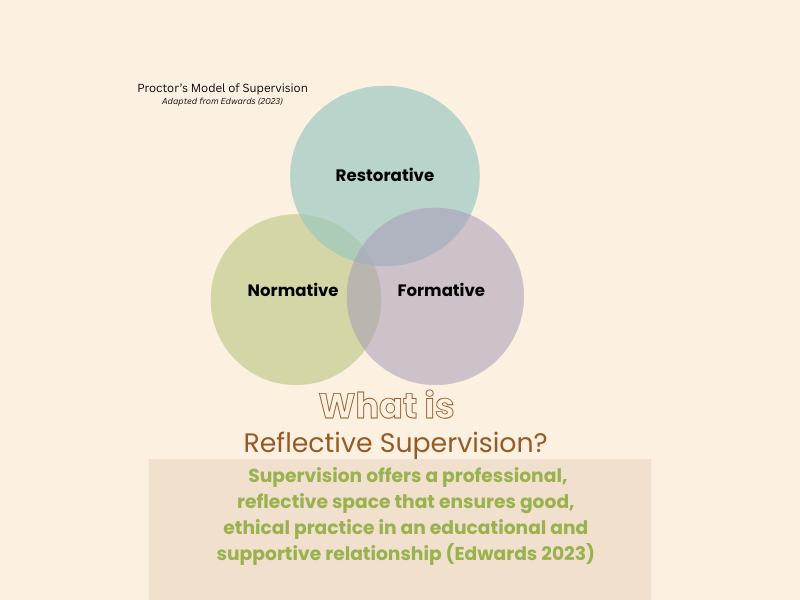
What is Reflective Supervision?
Based on Proctor’s Model reflective supervision has three main functions:
Formative/educative: Supports learning, professional growth, and skill development through reflection.
Restorative/supportive: Provides a supportive space to reflect on the emotional impact of practice.
Normative/managerial: Strengthens professional standards, accountability, and confidence in managing workplace challenges.
Source: Edwards, 2023
The Learning Cycle of Reflective Supervision
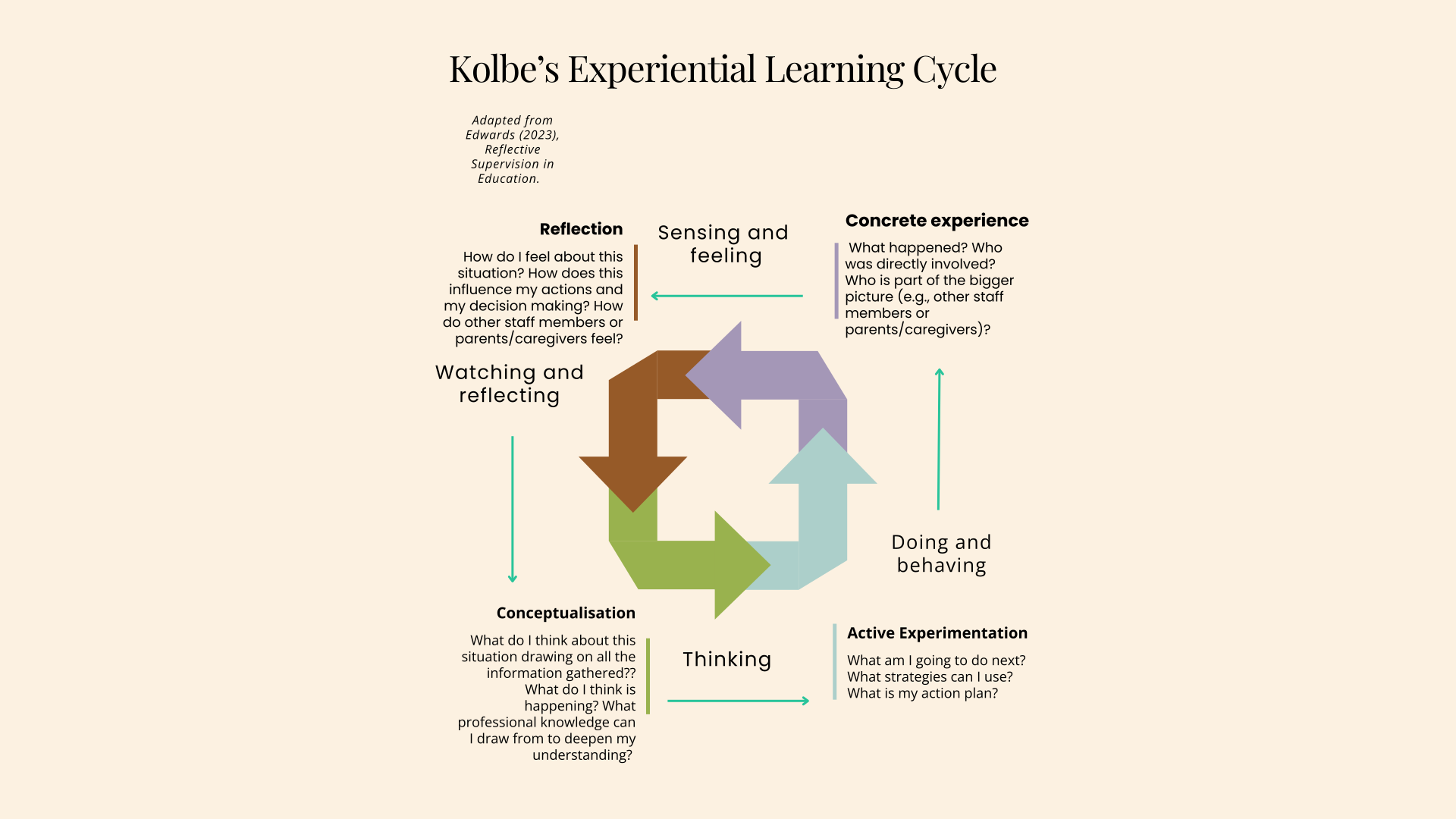
The Educators’ Community supports educators to critically reflect on their practice, strengthen capability, and achieve better outcomes for professional growth and pedagogy.
Concrete experience (sensing and feeling): This stage gathers the facts. What happened, who was involved, and who else may be affected, such as staff or parents/caregivers?
Reflection (watching and reflecting): Educators consider their feelings, how these may affect decisions, and how others involved may be feeling.
Conceptualisation (thinking): Educators use the experience and reflection stages to make sense of the situation, with support from colleagues and relevant theory where helpful.
Active experimentation (doing and behaving): Educators agree on the next steps and build confidence by finding their own solutions with guidance from supervision.
The Benefits of Reflective Supervision
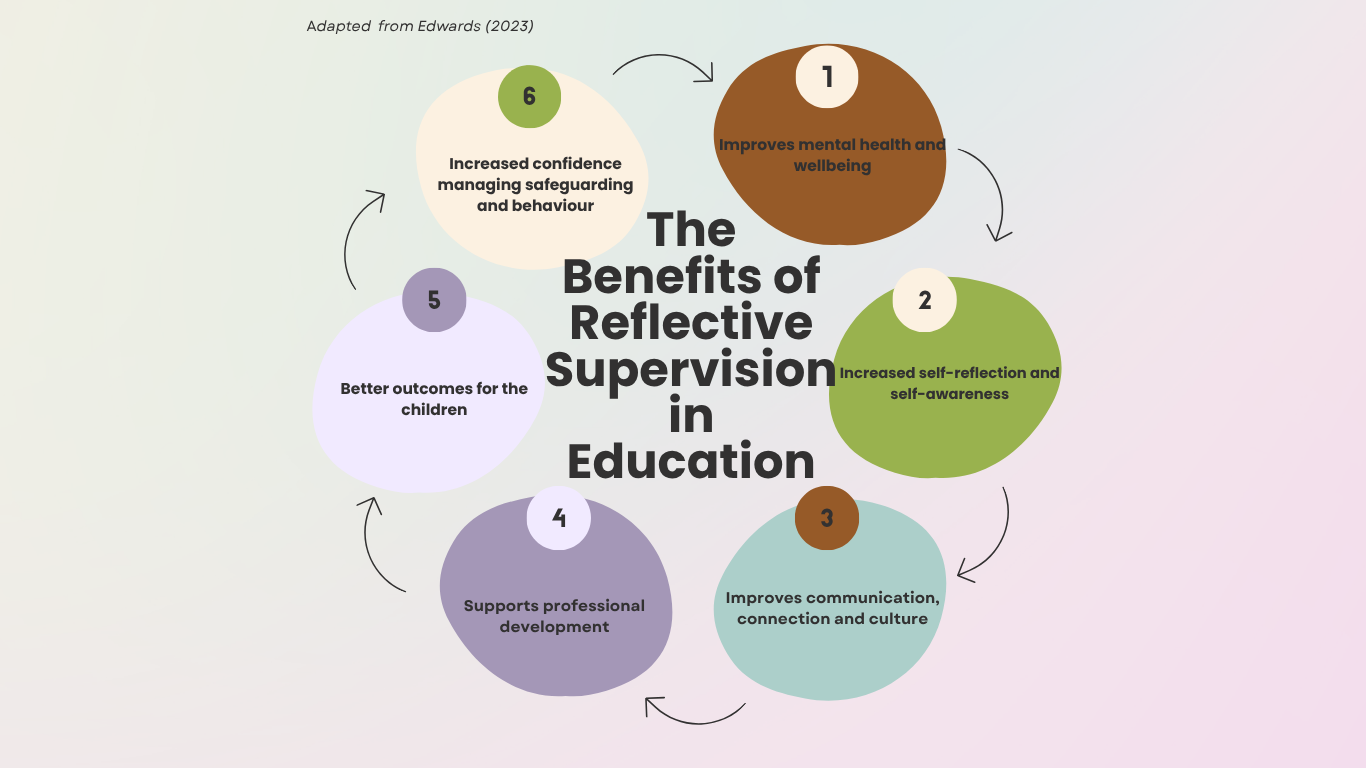
Reflective supervision offers meaningful, lasting benefits. The Educator’s Community helps educators feel supported, inspired and empowered, strengthening practice and enhancing workplace culture.
- Improves mental health and wellbeing by creating a safe space to share and reflect
- Increased self-reflection and self-awareness and strengthens reflective practice
- Improves communication, connection and culture through trust and empathy
- Supports professional development and more intentional practice
- Better outcomes for children through calmer, more supported adults
- Increased confidence in managing safeguarding and behaviour
Edwards, H. (2023). Reflective Supervision in Education.
We pay our respects to the traditional custodians of the lands on which we work on.
We acknowledge the continuing connections and special place of Aboriginal and Torres Strait Islander peoples.
We walk gently alongside First Nations people across the country, and we acknowledge that this always was and will always be Aboriginal land.